

Our story
From one plot,
a movement.
In 2019 a handful of people planted pepper on living trees on one hectare at Namang, Bangka. This is how that plot grew into thirteen spice hubs and more than two thousand farmers.
2019
The first plot
Pepper in Bangka was struggling: vines on dead poles got sick, the heat was harder to survive, and the soil was tired. In 2019 young Changemakers from Brazil, the Netherlands, the United States and Indonesia, brought together by reNature, planted the first agroforestry plot at Namang with PRETATERRA, One Tree Planted and Verstegen. It was one hectare, and it was called Watani.
Instead of dead poles, pepper climbed living trees. Fruit and timber grew in layers above it, the way an old Bangka kelekak garden grows. Watani also gave the movement its name for the people who carry it: Changemakers.
The plot is still productive. Its pepper yield rose from 0.30 kg per vine in 2023 to 0.67 kg in 2024 as the system matured.
- 1 ha at Namang
- 0.30 → 0.67 kg per vine, 2023 → 2024
- ~480 t CO₂ stored over 20 years (estimate)
The same hectare from the air, two years 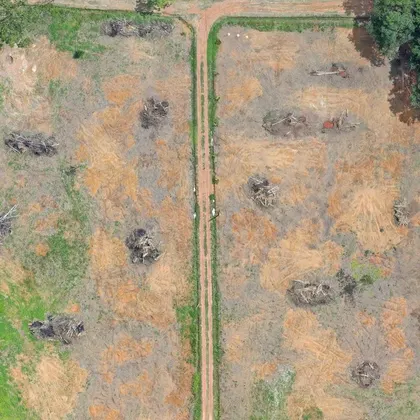 Jan 2019
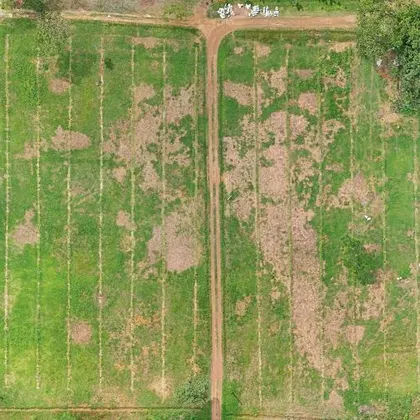 May 2019
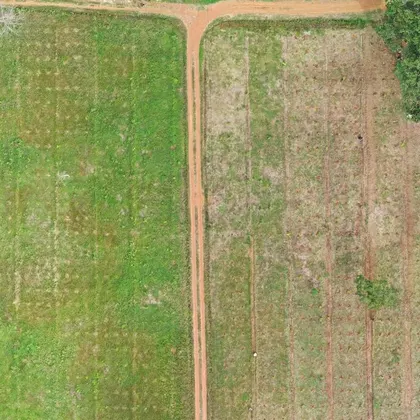 Nov 2019
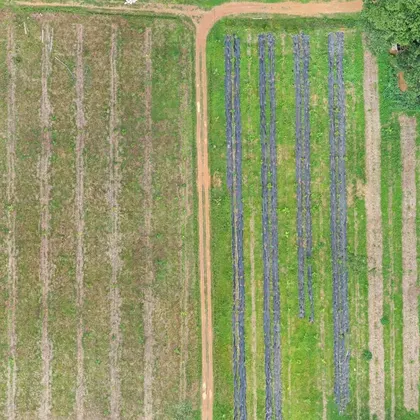 Jan 2020
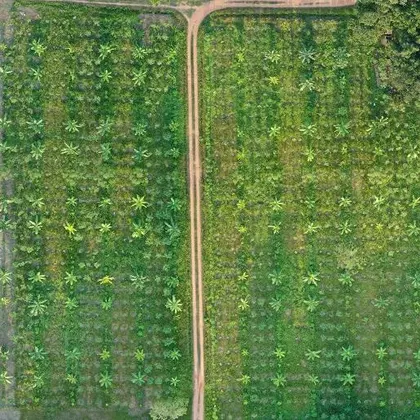 Sep 2020
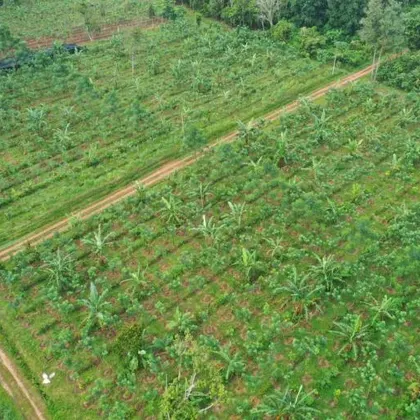 Feb 2021

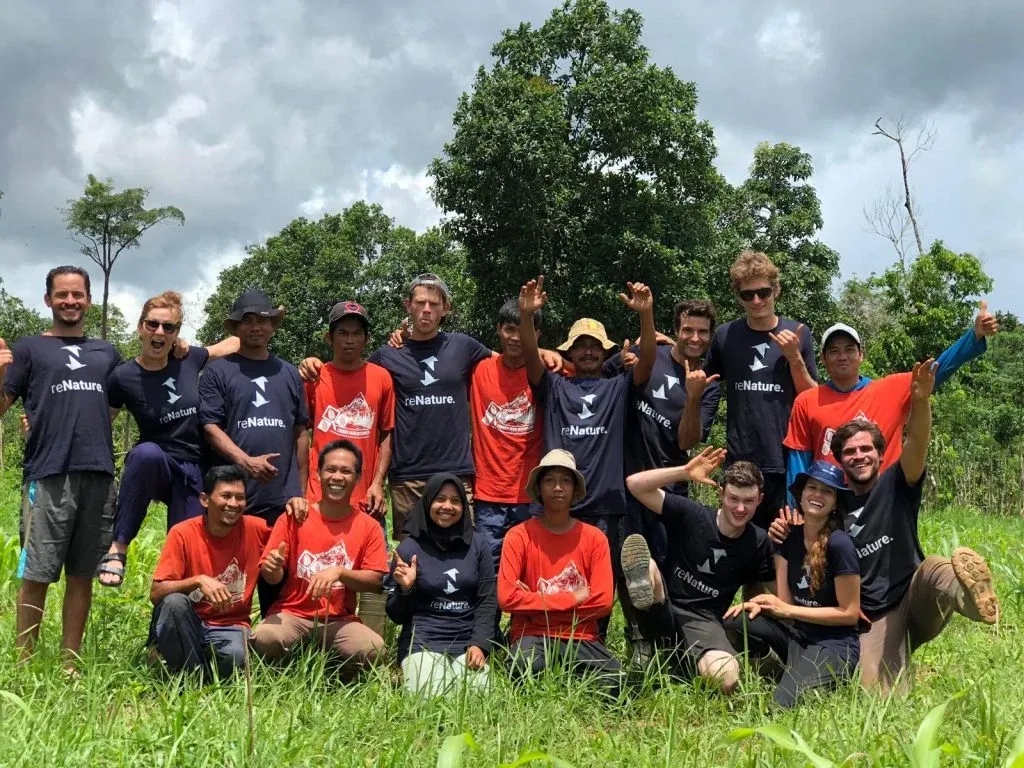
Namang, 2019: the Watani planting crew. 2019–22
Thirty-three farmers try it
A demonstration only matters if someone copies it. Watani ran four workshops in Bangka to show farmers what the plot was doing, and invited anyone interested to try it on their own land.
Thirty-three farmers did. Each designed and planted their own agroforestry garden, some by converting an old pepper plot, some starting fresh, with seeds and plants from the programme. They were the first adopters, before there was any larger project behind them.
- 4 workshops
- 33 farmer-designed gardens
- 13,000 pepper seedlings
- 14,000 living supports
- 1,000 fruit seedlings
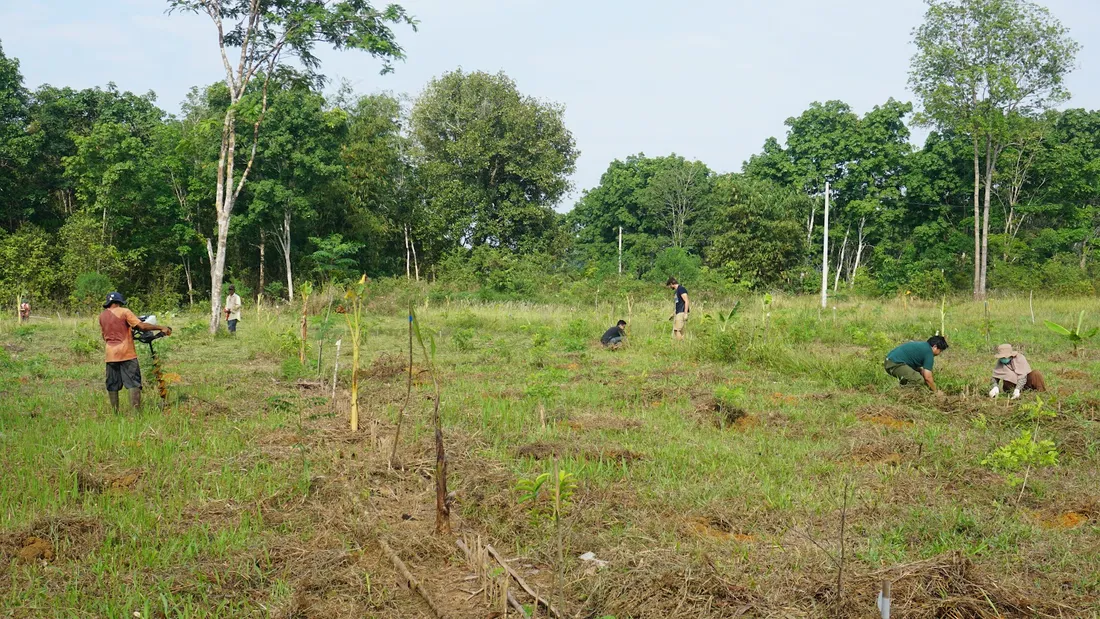
Planting a new garden, row by row. Dec 2022
aGROWforests begins
What thirty-three farmers had shown could now grow. In December 2022 Verstegen, PT CAN and the Dutch NGO Fairfood started aGROWforests within the Initiative for Climate Smart Supply Chains, implemented with German Cooperation and GIZ. The lesson of the plots became a package any farmer could join: seedlings, compost, a farm design and a soil test.
- 46,951 seedlings from 16 nurseries
- 132 t of compost to 308 farmers
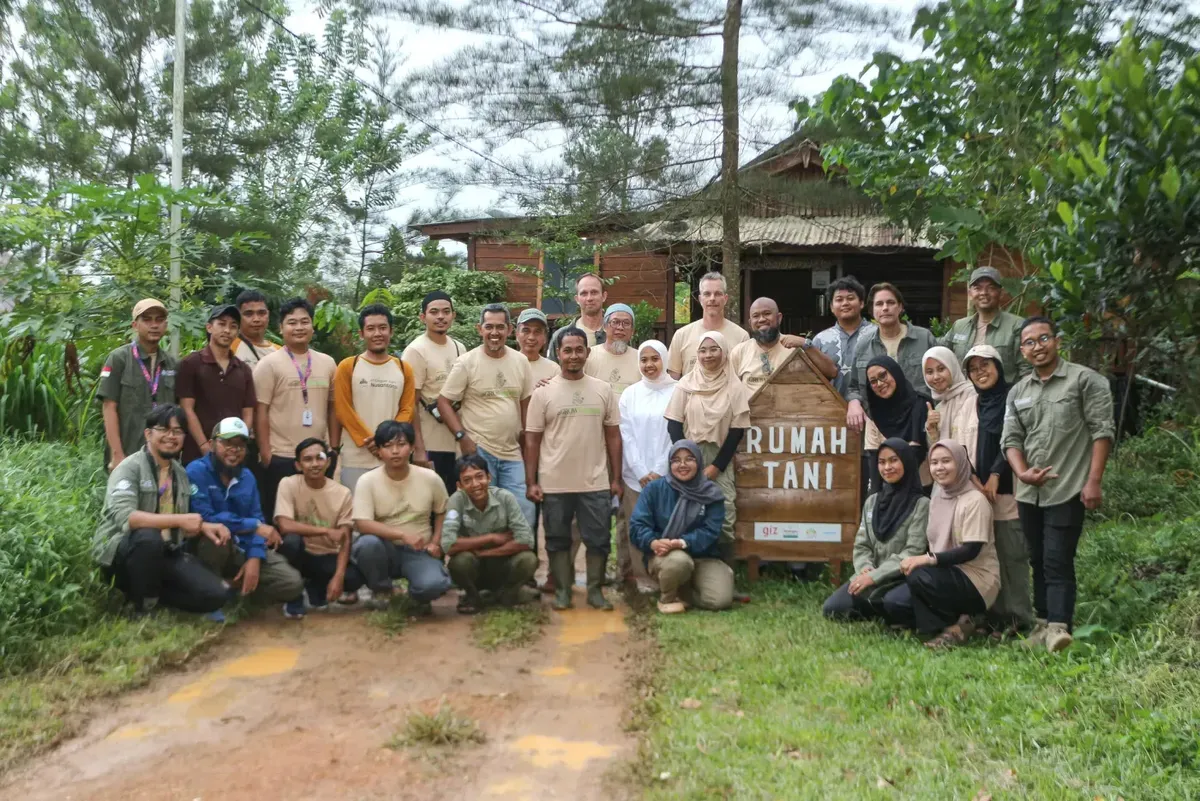
The team at Rumah Tani. 2024–25
Hubs in two provinces
The work moved into the villages. The first trainings at Tanjung Labu were recorded in February 2024; Bencah, Nyelanding and Tiram followed that April. In 2025 the network reached Namang, Lintang, Bantan, Penutuk and Pasir Putih, then crossed the strait to Lampung, where Ngarip opened in May.
Each hub became a nursery, a training floor and a meeting point run inside its own community, with a Changemaker at its centre.
- 13 spice hubs
- Bangka Belitung and Lampung
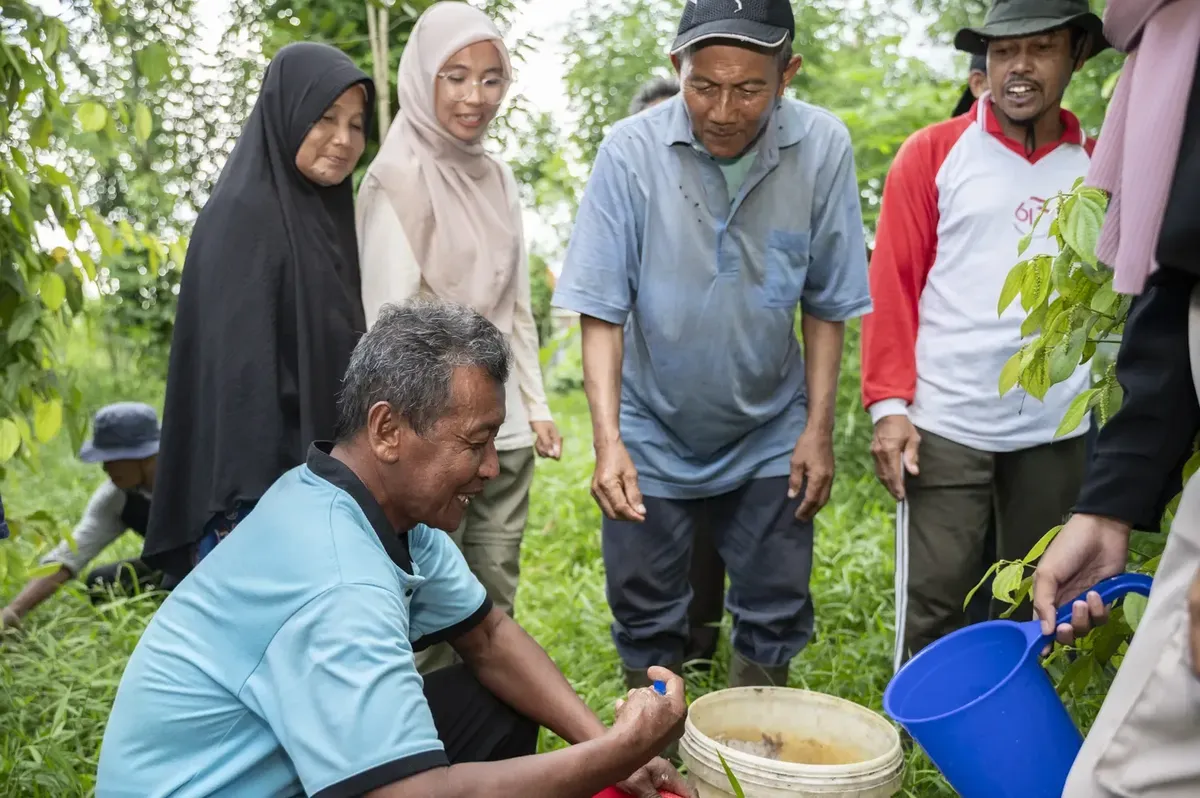
Learning at a hub, hands in the compost. Today
Still growing
The first hectare is now part of a network. The numbers below are dated, because a movement changes and a figure should say when it was true.
- 2,445
- farmersMay 2026
- 13
- spice hubsin two provinces
- 161 ha
- agroforestry in Bangkafrom 1 ha in 2019
- 1,613 ha
- farmed more sustainablyBangka and Lampung, May 2026
From 2027 the work continues as aGROWforests+, with support from the EU's SWITCH-Asia programme. The knowledge has to outlast any one project, so it is being kept where it can last: in the Changemakers, the farmers' own gardens, the hubs and the learning modules.
Sources: PT Cinquer Agro Nusantara partnership briefing (November 2026), the Watani project record (cinquer.id), aGROWforests progress reporting to GIZ, demo plot census (December 2024), and aGROWforests field records. Figures as of the dates shown.