Our Initiative
Demofarm
Demofarm concept focuses on integrating pepper cultivation with agroforestry practices to promote Kelekak Agroforestry maintained by champion farmers. The purpose of demofarm is to create a modular and replicable model of system that educates and demonstrates best practices for Pepper Kelekak Agroforestry.
What is Demofarm?
Demofarm is a champion farmer-led initiative that creates a modular, replicable model for Kelekak Agroforestry. Unlike experimental plots, demofarms are full-scale production systems maintained by experienced farmers who serve as local mentors and demonstrate best practices at scale.
The demofarm integrates pepper cultivation with Kelekak trees and complementary species, showing how agroforestry can be both ecologically sound and economically viable. These farms serve as living classrooms where other farmers can observe, learn, and replicate successful practices in their own fields.
Challenges Facing Pepper Farmers
Pepper farmers in Bangka-Belitung face multiple interconnected challenges that threaten their livelihoods and the sustainability of their farming systems:
- •Soil degradation: Monoculture practices have depleted soil fertility and organic matter
- •Pest and disease outbreaks: Reduced biodiversity increases vulnerability to crop pests and diseases
- •Declining yields: Soil exhaustion and climate stress lead to lower productivity over time
- •Climate change: Increased weather variability, droughts, and extreme events disrupt farming cycles
- •Lack of knowledge and training: Limited access to agroforestry techniques and regenerative practices
- •Economic pressure: Low prices and market volatility create financial instability
- •Land conversion: Pressure to convert agricultural land for other uses threatens long-term farming viability
Demofarm Objectives
Enhance Productivity
Demonstrate how agroforestry systems can maintain or increase pepper yields while improving overall farm productivity through diversified crops.
Restore and Maintain Soil Health
Show how Kelekak trees and companion species improve soil structure, organic matter, and nutrient cycling, reversing degradation from monoculture.
Promote Biodiversity and Ecosystem Health
Create habitat for beneficial insects, birds, and microorganisms that support natural pest control and pollination.
Climate Adaptation
Build resilience to climate variability through diverse crop systems, improved water retention, and microclimate regulation.
Improve Farmer Income and Market Access
Diversify income streams with multiple crops while maintaining pepper as the primary cash crop, and connect farmers to better market opportunities.
Demonstrate Cost-Effective Farming
Show that agroforestry can be implemented without excessive upfront costs, using locally available resources and knowledge.
Bedengung - Demofarm Bangka
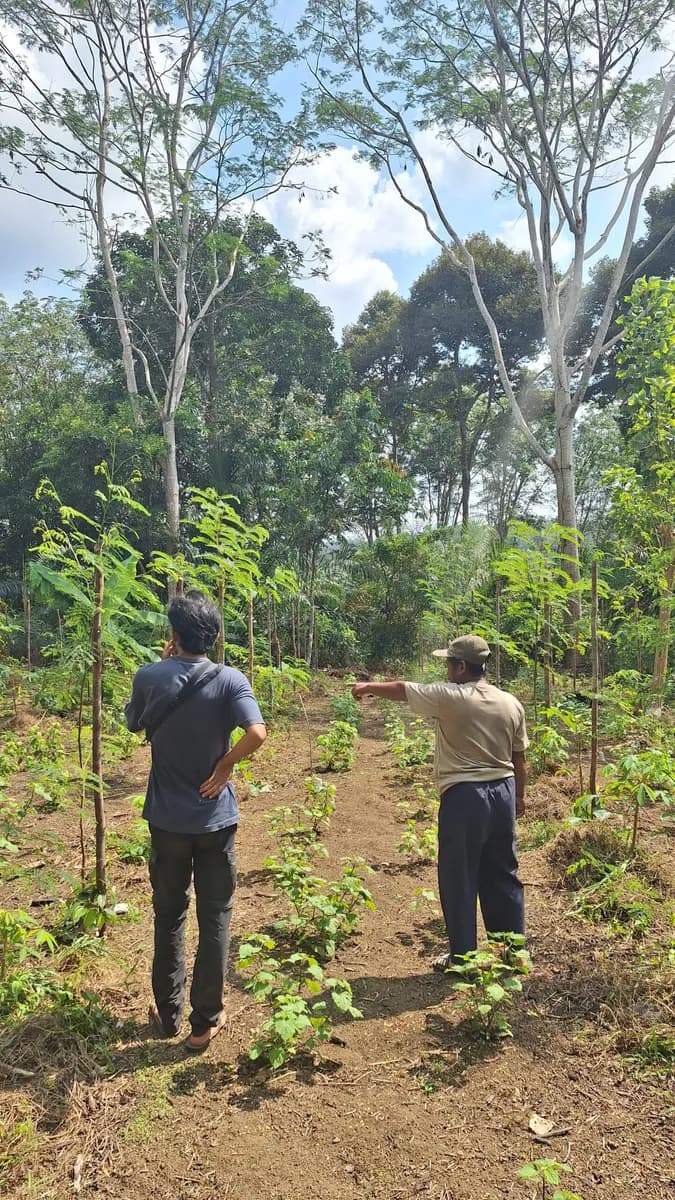
Bedengung Demofarm represents a flagship example of champion farmer-led Kelekak Agroforestry in Bangka. This demofarm serves as a comprehensive learning site where farmers can see a fully operational agroforestry system that integrates pepper with Kelekak trees and other companion species.
The Bedengung Demofarm demonstrates how champion farmers can successfully manage complex agroforestry systems while maintaining economic viability. It provides a replicable model that other farmers can adapt to their own contexts, helping scale sustainable practices across the region.
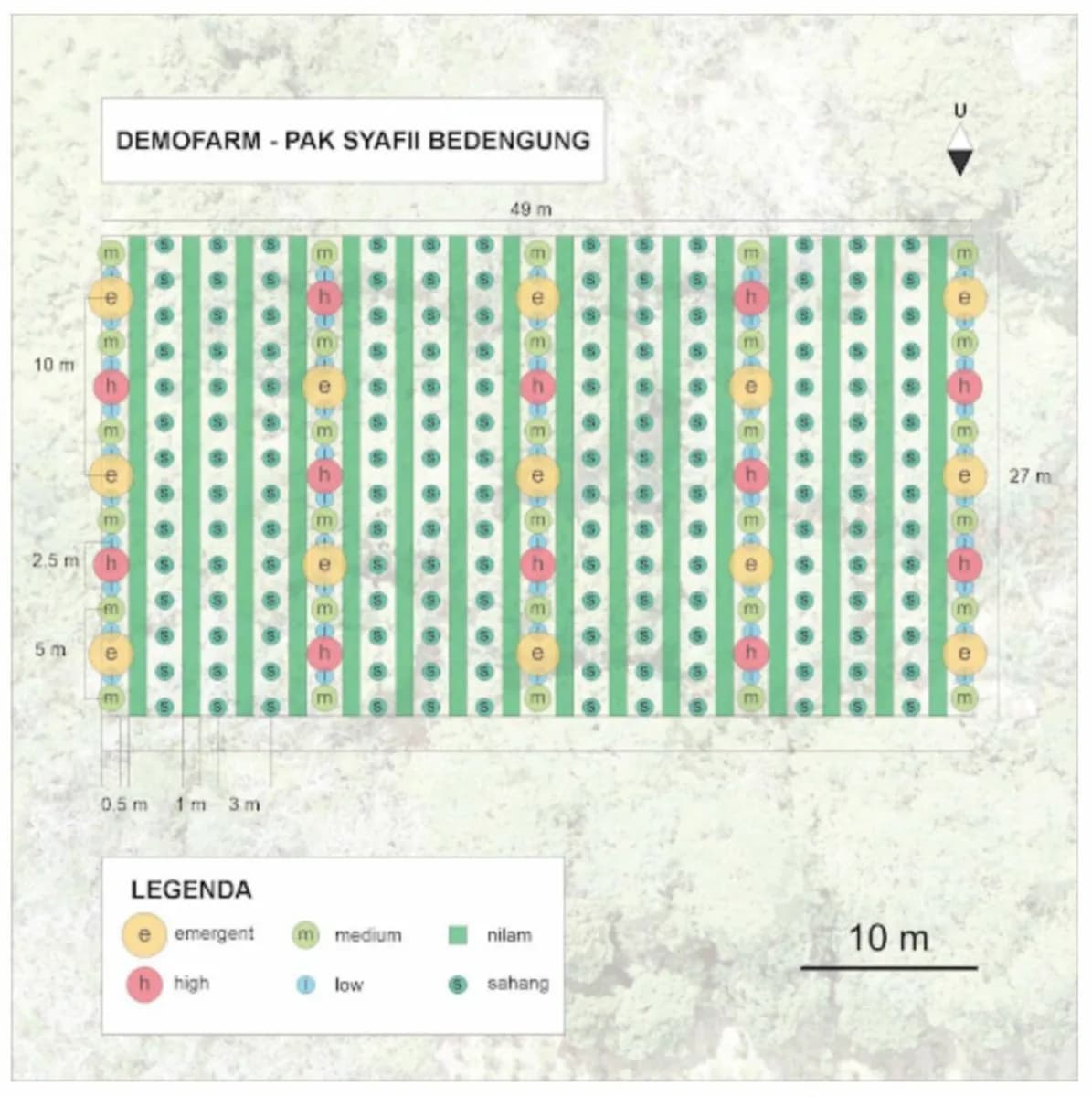
Farm Details
Create a modular and replicable model of system that educates and demonstrates best practices for Pepper Agroforestry maintained by champion farmer.
Total Plant (Dec 2024)
- Pepper: 178
- Fruit: 77
- Wood: 42
Species Distribution by Strata
| Strata | Species | Total |
|---|---|---|
| Emergent | Durian | 7 |
| Belangiran | 6 | |
| High | Avocado | 6 |
| Petai | 7 | |
| Medium | Calliandra | 30 |
| Low | Coffee | 35 |
| Target crop | Pepper | 168 |
| Patchouli | 1,728 |